Book
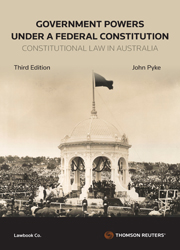
Government Powers Under a Federal Constitutional Third Edition
By John Pyke
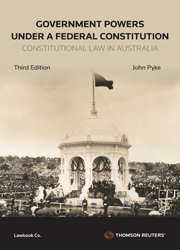
Government Powers Under a Federal Constitutional Third Edition

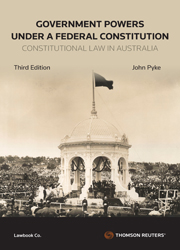
Government Powers Under a Federal Constitutional Third Edition

By John Pyke

Book

$165.00 RRP

Date: 22/12/2023

Code: 9780455248196

Lawbook Co., AUSTRALIA

Available Formats

Format Title Date Code Price
Book Government Powers Under a Federal Constitutional Third Edition 22/12/2023 9780455248196 $165.00 Add to cart
Book+eBook Government Powers Under a Federal Constitutional Third Edition Book + eBook 15/12/2023 43196600 $215.00 Add to cart
eBook - ProView Government Powers Under a Federal Constitutional Third Edition eBook 15/12/2023 9780455248202 $165.00 Add to cart

Available Formats

Format
Price
Book
$165.00
Additional information
Date
22/12/2023
Code
9780455248196
Add to cart
Book+eBook
$215.00
Additional information
Date
15/12/2023
Code
43196600
Add to cart
eBook - ProView
$165.00
Additional information
Date
15/12/2023
Code
9780455248202
Add to cart

Description

The third edition of John Pyke’s Government Powers brings the reporting and analysis of the case law on Australian Constitutional Law up to date until November 2023.  Just after the publication of the second edition, there was a significant case on the citizenship of Indigenous people (Love and Thoms).  In more recent significant cases, the Commonwealth government has been told that it cannot cancel the citizenship of terrorists without bothering to argue its case before a court (Benbrika 2023) or detain refugees indefinitely (NZYQ), and the States have been told that they cannot impose a mileage tax on drivers of electric vehicles (Vanderstock).  There has been the usual steady flow of cases on separation of judicial power, detention without trial, revocation of citizenship, and the Kable principle. In a series of less significant cases, a number of people have attempted to challenge the COVID-19 lockdown laws on various fanciful grounds, and failed.  (Clive Palmer’s attempt to be allowed into Western Australia did produce something new, in that the High Court applied its “structured proportionality” approach to section 92 – though it made no difference to the result.)   In the political arena, there has been the attempt to incorporate an Indigenous Voice in the Constitution, starting with optimistic hopes and ending in failure.

As before, after spelling out the basic principles and some history, the chapters are arranged into two main parts – Part C dealing with the Commonwealth Constitution as, directly and indirectly, a protector of civil rights (though not to the extent that people can ignore rational quarantine laws!), and Part D dealing with the division of legislative powers between Commonwealth and States.  The tendency for new cases to very largely fall into  the “rights” part and only occasionally into the “federalism” part continues.  John Pyke narrates all of this with his usual verve and clarity.


Table of Contents

Table of Contents

PART A

Constitutional Concepts and Their History

Chapter 1

The Significance of Constitutions and Constitutional Law

Chapter 2

Sources of Constitutional Ideas

Chapter 3

The Colonisation of Australia and the Development of Six Self-Governing Colonies

Chapter 4

Federation and the Drafting and Passage of the Commonwealth Constitution

Chapter 5

A General Outline of the Constitution


PART B

General Principles of Constitutional Law and Litigation

Chapter 6

The Constitution as Supreme Law, and Evolving Theories as to Why It Is So

Chapter 7

Constitutional Litigation

Chapter 8

General Principles of Interpretation of the Commonwealth Constitution


PART C

The “Branches” of Government, General Limits on

Their Powers, and Consequences for Individual Rights


PART C1

Parliamentary Powers and Limits on Them, Other

Than Federal Limits

Chapter 9

Commonwealth Parliament: Rules About Its Composition

Chapter 10

Commonwealth Parliament: The Law-Making Process     

Chapter 11

State Parliaments: Generally Broad Powers, Subject to a

Power of Self-Limitation

Chapter 12

Some Non-limits on the Legislative Powers of Australian Parliaments

Chapter 13

The Right to Vote at Commonwealth Elections

Chapter 14

The Constitutional Freedom of Political Discussion

Chapter 15

A Limit Applying Only to the Commonwealth: Acquisition of Property on Just Terms

Chapter 16

Express, but Generally Weak, Protection of Human Rights Against Laws Made by the Commonwealth


PART C2

Executive Power and Its Subjection to Law

Chapter 17

Governors and Ministers: Dignified Fictions and the Reality of Executive Power

Chapter 18

The Law behind the Conventions: Parliamentary Control of Finance

Chapter 19

Sources of Executive Power

Chapter 20

Limits on Executive Power: Modern Developments in the Rule of Law


PART C3

The Separation of Judicial Power

Chapter 21

Federal Judicial Power to Be Given Only to “Chapter III Courts”

Chapter 22

Commonwealth Laws Affecting Chapter III Courts: The Limits

Chapter 23

State and Territory Laws Affecting Their Own Courts and Tribunals: Limits Imposed by the Commonwealth Constitution


PART D

The Federal Division of Legislative Powers


PART D1

The Range of Commonwealth Legislative Powers

Chapter 24

Sources and Interpretation of Commonwealth Legislative Powers

Chapter 25

Business-Regulation Powers: Trade and Commerce, Corporations, Other Powers

Chapter 26

Nation-State Powers: Internal Regulation of Government, External Affairs, Defence, Internal Security, Immigration and Aliens

Chapter 27

Social Powers: Marriage and Divorce; Pensions, Benefits and Health Services; People of Any “Race”

Chapter 28

The Commonwealth’s Financial Powers: Tax, Grants to the States, and Spending Money

Chapter 29

“Federal” Limitations on Commonwealth Power


PART D2

The Effects of the Commonwealth Constitution on the States and Territories

Chapter 30

General Effects of the Commonwealth Constitution on State Powers: Concurrent Powers, Commonwealth Exclusive Powers and Prohibitions

Chapter 31

State Laws Not to Impose Customs or Excise Duties

Chapter 32

Freedom of Interstate Trade, Commerce and Intercourse

Chapter 33

Discrimination Against Out-of-State Residents Prohibited

Chapter 34

Inconsistency of State and Territory Laws with Laws of the Commonwealth

Chapter 35

Intergovernmental Immunities

Chapter 36

A Final Note on the States, and the Drive for More Uniform Laws

Chapter 37

The Territories: Like States in Some Ways But Not in Others


PART E

Possible Changes to the Federation       

Chapter 38

New States, and Changing the Boundaries of States

Chapter 39

Formal Alteration of the Constitution: The Record So Far and Current Issues


Got a Promo Code?

Available Formats

Format Title Date Code Price
Book Government Powers Under a Federal Constitutional Third Edition 22/12/2023 9780455248196 $165.00 Add to cart
Book+eBook Government Powers Under a Federal Constitutional Third Edition Book + eBook 15/12/2023 43196600 $215.00 Add to cart
eBook - ProView Government Powers Under a Federal Constitutional Third Edition eBook 15/12/2023 9780455248202 $165.00 Add to cart

Available Formats

Format
Price
Book
$165.00
Additional information
Date
22/12/2023
Code
9780455248196
Add to cart
Book+eBook
$215.00
Additional information
Date
15/12/2023
Code
43196600
Add to cart
eBook - ProView
$165.00
Additional information
Date
15/12/2023
Code
9780455248202
Add to cart

Have a promo code?

  • Free shipping on all orders Australia Wide

Description

The third edition of John Pyke’s Government Powers brings the reporting and analysis of the case law on Australian Constitutional Law up to date until November 2023.  Just after the publication of the second edition, there was a significant case on the citizenship of Indigenous people (Love and Thoms).  In more recent significant cases, the Commonwealth government has been told that it cannot cancel the citizenship of terrorists without bothering to argue its case before a court (Benbrika 2023) or detain refugees indefinitely (NZYQ), and the States have been told that they cannot impose a mileage tax on drivers of electric vehicles (Vanderstock).  There has been the usual steady flow of cases on separation of judicial power, detention without trial, revocation of citizenship, and the Kable principle. In a series of less significant cases, a number of people have attempted to challenge the COVID-19 lockdown laws on various fanciful grounds, and failed.  (Clive Palmer’s attempt to be allowed into Western Australia did produce something new, in that the High Court applied its “structured proportionality” approach to section 92 – though it made no difference to the result.)   In the political arena, there has been the attempt to incorporate an Indigenous Voice in the Constitution, starting with optimistic hopes and ending in failure.

As before, after spelling out the basic principles and some history, the chapters are arranged into two main parts – Part C dealing with the Commonwealth Constitution as, directly and indirectly, a protector of civil rights (though not to the extent that people can ignore rational quarantine laws!), and Part D dealing with the division of legislative powers between Commonwealth and States.  The tendency for new cases to very largely fall into  the “rights” part and only occasionally into the “federalism” part continues.  John Pyke narrates all of this with his usual verve and clarity.


Table of Contents

Table of Contents

PART A

Constitutional Concepts and Their History

Chapter 1

The Significance of Constitutions and Constitutional Law

Chapter 2

Sources of Constitutional Ideas

Chapter 3

The Colonisation of Australia and the Development of Six Self-Governing Colonies

Chapter 4

Federation and the Drafting and Passage of the Commonwealth Constitution

Chapter 5

A General Outline of the Constitution


PART B

General Principles of Constitutional Law and Litigation

Chapter 6

The Constitution as Supreme Law, and Evolving Theories as to Why It Is So

Chapter 7

Constitutional Litigation

Chapter 8

General Principles of Interpretation of the Commonwealth Constitution


PART C

The “Branches” of Government, General Limits on

Their Powers, and Consequences for Individual Rights


PART C1

Parliamentary Powers and Limits on Them, Other

Than Federal Limits

Chapter 9

Commonwealth Parliament: Rules About Its Composition

Chapter 10

Commonwealth Parliament: The Law-Making Process     

Chapter 11

State Parliaments: Generally Broad Powers, Subject to a

Power of Self-Limitation

Chapter 12

Some Non-limits on the Legislative Powers of Australian Parliaments

Chapter 13

The Right to Vote at Commonwealth Elections

Chapter 14

The Constitutional Freedom of Political Discussion

Chapter 15

A Limit Applying Only to the Commonwealth: Acquisition of Property on Just Terms

Chapter 16

Express, but Generally Weak, Protection of Human Rights Against Laws Made by the Commonwealth


PART C2

Executive Power and Its Subjection to Law

Chapter 17

Governors and Ministers: Dignified Fictions and the Reality of Executive Power

Chapter 18

The Law behind the Conventions: Parliamentary Control of Finance

Chapter 19

Sources of Executive Power

Chapter 20

Limits on Executive Power: Modern Developments in the Rule of Law


PART C3

The Separation of Judicial Power

Chapter 21

Federal Judicial Power to Be Given Only to “Chapter III Courts”

Chapter 22

Commonwealth Laws Affecting Chapter III Courts: The Limits

Chapter 23

State and Territory Laws Affecting Their Own Courts and Tribunals: Limits Imposed by the Commonwealth Constitution


PART D

The Federal Division of Legislative Powers


PART D1

The Range of Commonwealth Legislative Powers

Chapter 24

Sources and Interpretation of Commonwealth Legislative Powers

Chapter 25

Business-Regulation Powers: Trade and Commerce, Corporations, Other Powers

Chapter 26

Nation-State Powers: Internal Regulation of Government, External Affairs, Defence, Internal Security, Immigration and Aliens

Chapter 27

Social Powers: Marriage and Divorce; Pensions, Benefits and Health Services; People of Any “Race”

Chapter 28

The Commonwealth’s Financial Powers: Tax, Grants to the States, and Spending Money

Chapter 29

“Federal” Limitations on Commonwealth Power


PART D2

The Effects of the Commonwealth Constitution on the States and Territories

Chapter 30

General Effects of the Commonwealth Constitution on State Powers: Concurrent Powers, Commonwealth Exclusive Powers and Prohibitions

Chapter 31

State Laws Not to Impose Customs or Excise Duties

Chapter 32

Freedom of Interstate Trade, Commerce and Intercourse

Chapter 33

Discrimination Against Out-of-State Residents Prohibited

Chapter 34

Inconsistency of State and Territory Laws with Laws of the Commonwealth

Chapter 35

Intergovernmental Immunities

Chapter 36

A Final Note on the States, and the Drive for More Uniform Laws

Chapter 37

The Territories: Like States in Some Ways But Not in Others


PART E

Possible Changes to the Federation       

Chapter 38

New States, and Changing the Boundaries of States

Chapter 39

Formal Alteration of the Constitution: The Record So Far and Current Issues


AUSTRALIA
Bookstore